Urología
03-11-2025
Fecha de publicación: 04-08-2025
Actualizado en: 04-08-2025
Asunto: Salud sexual, Urología
Tiempo estimado de lectura: 1 min

Autor del Artículo
Miriam Manfrini
Editor médico
Francesco Greco
Editor y Traductor
Viktoryia LuhakovaProstatectomy is a very common surgical procedure among men, particularly after the age of 50, and is often performed to treat prostate cancer, although not exclusively.
One of the most widespread concerns regarding this surgery is the potential loss of sexual function, particularly the ability to achieve an erection.
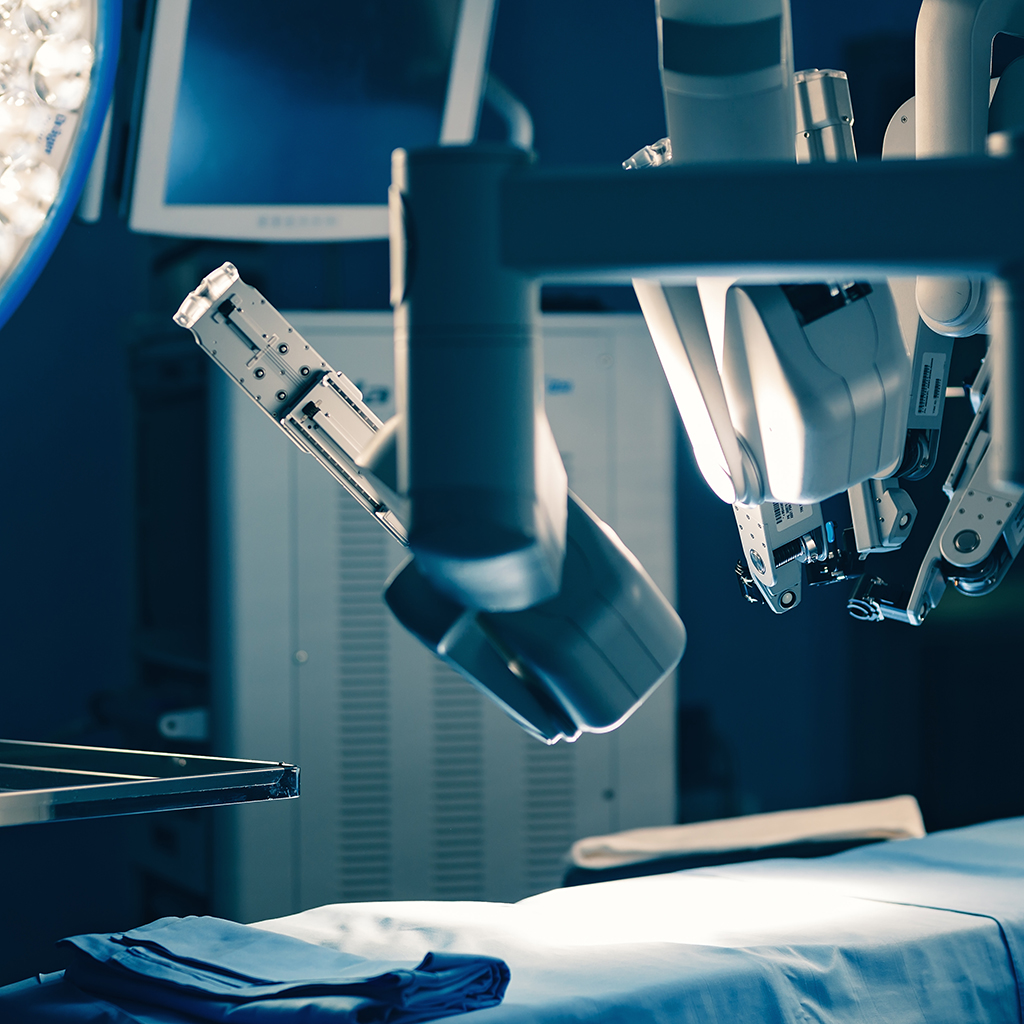
Today, robot-assisted surgery and new nerve-sparing techniques can be employed to preserve male sexual function, whenever clinical and oncologic conditions allow. Professor Francesco Greco, urology specialist at Casa di Cura La Madonnina, explains this in detail.
“Prostatectomy is a surgical procedure involving the partial or total removal of the prostate, the small male gland located below the bladder and involved in the production of seminal fluid,” explains Prof. Greco.
Robotic prostatectomy can be performed in two forms, depending on the clinical indication:
The primary sexual concern following radical prostatectomy is erectile dysfunction (ED), which can result from damage to the cavernous (erectile) nerves responsible for erection.
The impact of the procedure varies based on several key factors:
Robotic surgery has revolutionized the approach to prostatectomy by offering several advantages:
Thanks to magnified 3D vision and superior surgical precision, robotic prostatectomy optimizes the nerve-sparing approach, which aims to preserve the erectile nerve bundles that envelop the prostate, enabling the potential recovery of erectile function postoperatively.
Nerve-sparing techniques include:
For patients with preexisting erectile dysfunction who wish to regain erectile function, it is possible to perform a tricomponent penile prosthesis implant at the same time as the robotic prostatectomy.
This minimally invasive procedure of short duration allows the patient to address the oncologic problem while also restoring the possibility of a satisfying sexual life.
After a partial (simple) prostatectomy, antegrade (normal) ejaculation may still occur, although retrograde ejaculation, in which semen flows back into the bladder instead of exiting via the urethra, is common. This can reduce the volume of ejaculate while typically maintaining orgasm and sexual pleasure.
After a radical prostatectomy, antegrade ejaculation is no longer possible because the prostate and seminal vesicles, which produce semen, are completely removed. However, orgasm can still be achieved, often with preserved satisfaction, despite the absence of ejaculation.
In both cases, fertility is affected or completely lost. Men wishing to have children are advised to consider sperm cryopreservation before surgery.
“A prostatectomy should not be seen as the end of a man’s sexual life. Robot-assisted surgery and nerve-sparing techniques offer real opportunities to preserve erectile function whenever feasible. Accurate preoperative evaluation, treatment at specialized centers, and a structured postoperative rehabilitation program are all essential for optimal recovery,” concludes Prof. Greco.